
.png)
.png)
.png)
.png)


Overview

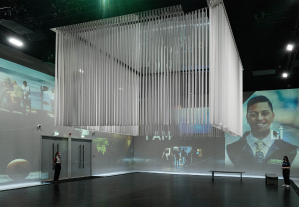
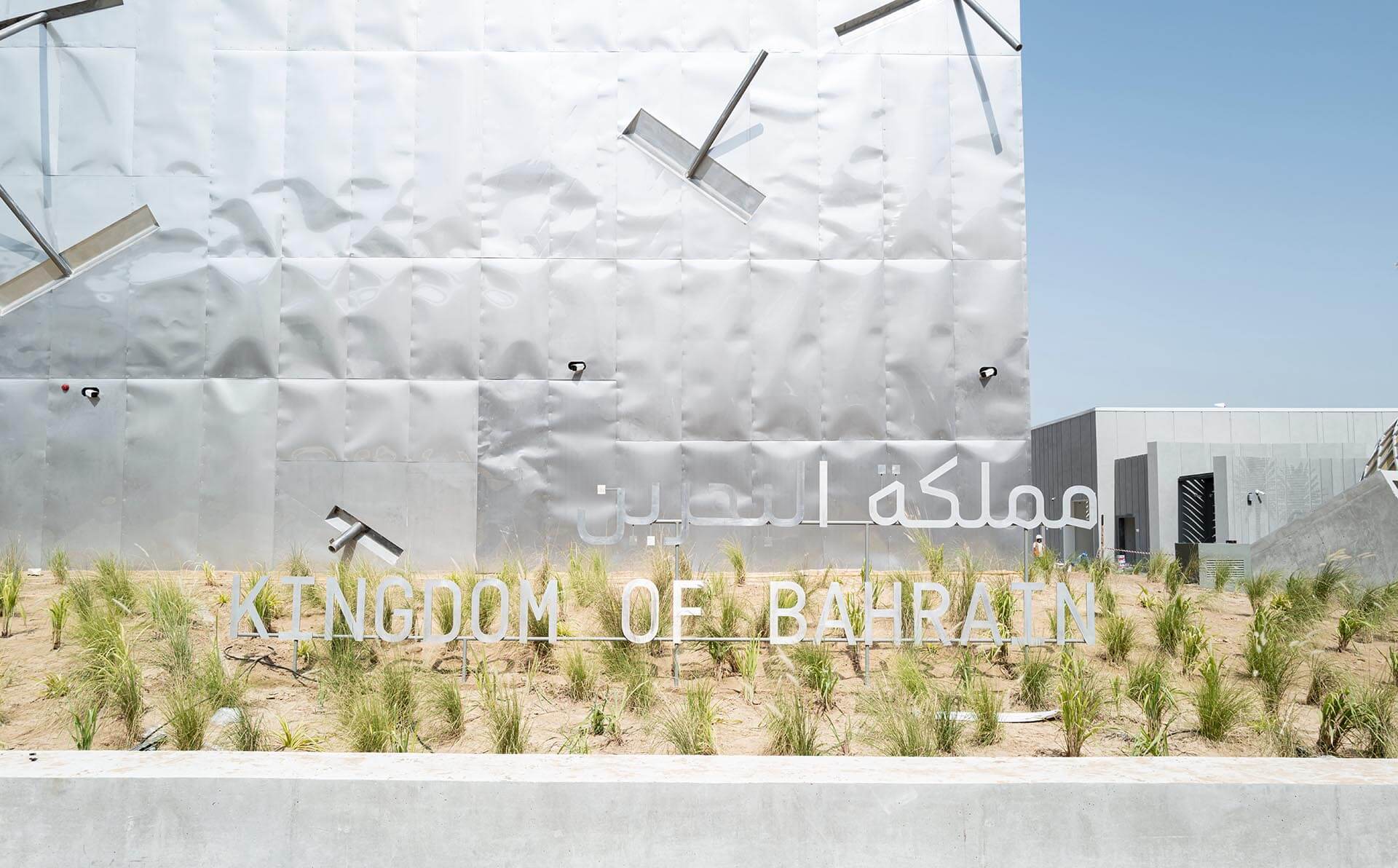
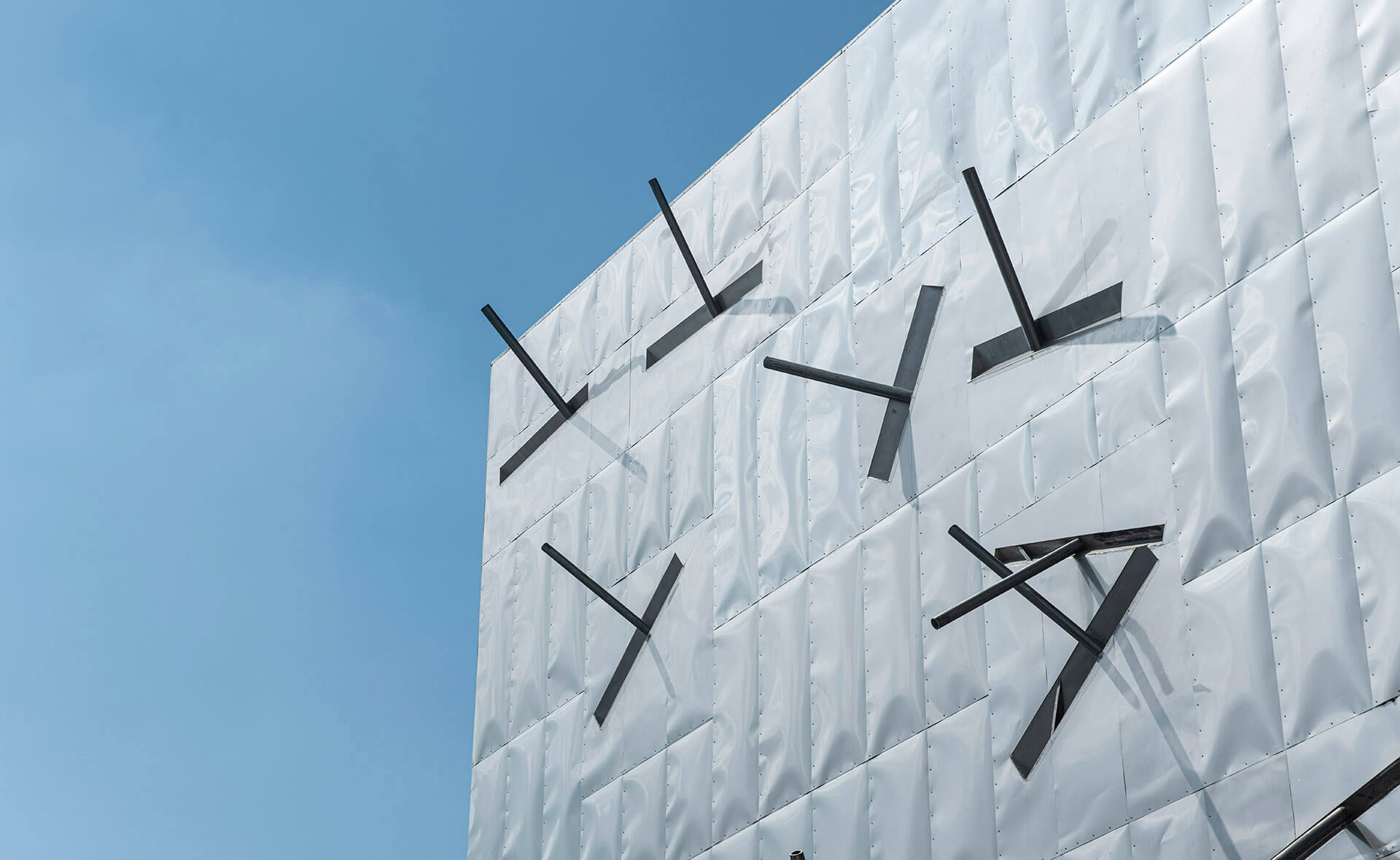
The Bahrain Pavilion focused on the theme of “Density” as an enabler of opportunities. In fact, Bahrain is the sixth densest country in the world and density is woven into the very fabric of the nation. The Bahrain pavilion was conceived as a physical and spatial way to experience such density: It was imagined as an open plan space submerged in the site and accessed through a 20 meters long concrete ramp that created a transition between the outer and inner worlds of the pavilion. The structure of this central space was made of 126 steel columns of 110mm in diameter and 24m in height, joining each other at several points throughout the height of the space, with an interior façade in aluminum. The columns supported one another as well as the roof, providing a poetic structure that demonstrated the principles of connection and density and represented the ties in the community. RIMOND was appointed as principal.
Challenge
Bahrain Pavilion’s unique architecture involved 126 inclined structural columns intersecting at 243 points supporting the façade of the pavilion, like giant Mikado sticks. Therefore, the columns and the façade panels had be installed following a specific sequence to avoid clashes and keep the structural integrity during installation.
Solutions
Following a thorough study carried out by our engineers together with the construction management team, we applied our prefabrication expertise to the development of an erection methodology and a temporary structure design that maximized the offsite assembly at the factory and lay-down of the façade panels to be installed at the project site. We sequenced the installation into 243 stages to avoid clashes between the columns while keeping the structural integrity at every stage. This fast-tracked approach reduced the number of crane lifts, work at height and transportation while increasing our HSE and sustainability performance.




.png)
.png)


